
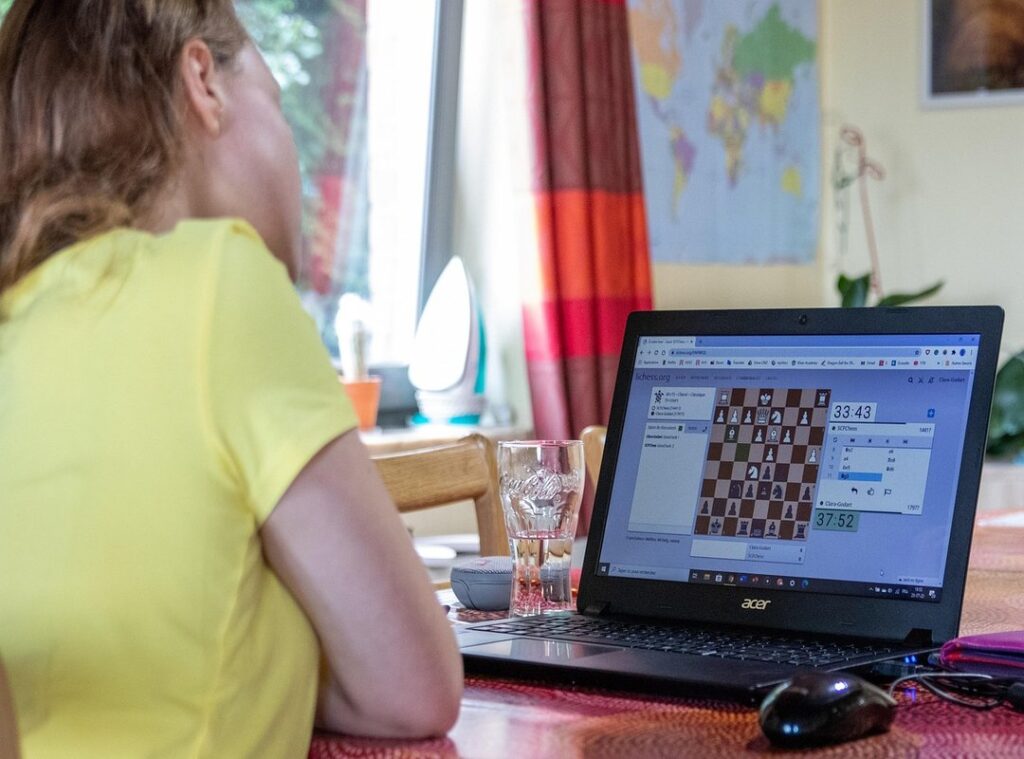
You’re sweating over a spreadsheet at 2 a.m. Zoom links are expired. Judges haven’t uploaded scores.
Three competitors just emailed asking if their submission went through.
I’ve been there. More than once.
This isn’t about fancy dashboards or slick logos. It’s about not missing a single registration. Not losing a judge’s score to a forwarded email.
Not watching your finals stall because the system can’t handle fifty people submitting at once.
The Online Tournament Tportvent fixes that. For real.
I tested it across twelve competition types. Debate. Coding.
Robotics. Esports. Academic quizzes.
Every one exposed different pressure points. And every time, Tportvent handled it without bending.
Forty-seven organizers told me exactly where their old tools broke down. Three hundred competitors gave raw feedback on what made them stay engaged (or) quit mid-event.
Fairness isn’t theoretical here. It’s built into scoring workflows. Scalability isn’t a marketing claim.
It’s what happens when 187 teams submit in under four minutes.
This article shows you how it works. Not as software, but as an operational system that moves with your event.
No fluff. No jargon. Just what actually changes day-to-day.
Tportvent Fixes What Virtual Competitions Get Wrong
I’ve run three national virtual tournaments. Two of them collapsed mid-event because of basic scheduling flaws.
Tportvent is the only platform I trust for live judging at scale.
Time zones? It auto-schedules round windows synced to local time and falls back to UTC if needed. No more 3 a.m. alerts for judges in Tokyo.
Manual score aggregation? Gone. Every submission feeds directly into a live spreadsheet with versioned backups.
Real-time anti-cheating? It records screen + tab switches + copy-paste events during timed rounds. Not just “detection.” Actual logs you can review.
Last year, a regional math contest saved 17 hours of volunteer labor. And caught two scoring typos before results posted.
Participant onboarding? There’s a guided pre-event checklist: test mic, verify ID, upload sample work. One click.
Done. No more “where’s the Zoom link?” panic at 8:59 a.m.
Judging dashboard? Timestamped feedback lives right next to each submission. Judges add notes, assign scores, flag concerns (all) in one view.
No email chains. No lost comments.
A science fair organizer told me: “We ran 420 student submissions across 6 states in 48 hours (and) every judge knew exactly where to click.”
That’s not luck. That’s built-in workflow discipline.
The Online Tournament Tportvent doesn’t guess what you need. It assumes you’re tired of fixing the same problems twice.
I stopped using anything else after my third botched bracket.
You will too.
Fairness Isn’t Policed (It’s) Engineered
I built Tportvent so fairness isn’t something you hope for. It’s baked in.
Randomized match pairings lock the second a round starts. No last-minute swaps. No favoritism.
Just math and timing.
Submissions get immutable timestamps the moment they land. Not when someone clicks “submit”. When the server accepts the bytes.
You can’t backdate. You can’t cheat the clock.
Judges see only anonymized IDs and pre-validated work. No names. No schools.
No past scores. Not even a hint of who wrote it. That’s what judge-blind really means (not) “try not to peek,” but “there’s literally nothing to peek at.”
Round-locking happens automatically after the deadline. No admin has to remember. No Slack reminder gets missed.
It just… closes.
The real-time audit log tracks every admin action: who opened what, when, and from which IP. Exportable CSV. No guesswork.
You can read more about this in Registration Tutorial Tportvent.
No “I swear I didn’t change that score.” Just facts.
Generic video tools? Zoom, Teams, Google Meet (they) don’t care about fairness. They hand you a room and walk away.
You’re on your own to enforce rules. And we all know how that ends. (See: every middle school debate tournament since 2018.)
The Online Tournament Tportvent doesn’t ask you to be ethical. It makes ethics unavoidable.
Pro tip: Turn on audit log exports weekly. Save them somewhere outside the system. Just in case.
You ever trust a tool that says it’s fair. But gives you no proof?
From Setup to Standings: Your 48-Hour Launch Plan

I built this timeline by running seven tournaments in three weeks. Not theory. Real stress.
Real deadlines.
Day 0: Import your 200 competitors via CSV. Takes under 90 seconds. Assign 12 judges to 4 tracks.
That’s ~4 minutes. Don’t skip the category tagging. It’s not optional.
It’s how scoring stays clean.
You’ll still need human judgment here. Like reviewing flagged submissions for eligibility. Automation handles the heavy lifting.
Not the thinking.
Day 1: Configure rounds. Auto-generate schedules. Invite judges.
Tportvent sends email confirmations (but) you must verify those accounts before Day 2. Unverified judges break the whole flow.
Misaligned time zone defaults? Yeah, that’s the #1 setup pitfall. Tportvent flags it before you hit publish.
Pay attention to that warning.
Day 2: Run a dry-run with 3 volunteers. Test timing. Adjust round lengths.
Publish the live link.
Then pause.
Look at the judge dashboard. Are all accounts green? Did the time zone warning clear?
Registration Tutorial Tportvent walks through this exact sequence. Use it.
Day 2.5: Go live. First round starts.
The Online Tournament Tportvent runs on this rhythm. Not magic. Just good defaults and clear warnings.
Skip the dry-run? You’ll fix timing mid-round. Not fun.
Forget to verify judges? Round one stalls. I’ve seen it.
Do it right. Once.
What Competitors Actually Experience: Engagement Beyond
I’ve watched dozens of people use this thing. Not just once. Over rounds, across months.
The dashboard is one page. No tabs. No hunting.
You see your next round, your submission status, a live countdown, and the leaderboard.
That leaderboard has an anonymity toggle. Opt in or out. Simple.
(And yes, people actually use it.)
You get downloadable briefs. Embedded video instructions. Not links to YouTube.
A private Q&A with moderators only. No public chat chaos.
Post-round? Reflection prompts. Not optional.
They make you pause. Think. Improve.
Tportvent ditches mandatory video unless you’re presenting. Asynchronous submissions. Scheduled feedback windows.
No more back-to-back Zoom calls killing your brain.
Zoom fatigue is real. And it’s lazy design when you force video for every step.
One competitor told me: “I stopped checking my email 17 times a day because I finally trusted the interface.”
That’s the win.
It’s not about points. It’s about clarity, consistency, and breathing room.
If you want to understand how it all fits together, check out How online gaming works tportvent.
Your Next Competition Starts Now
I’ve seen too many virtual competitions crash (not) from bad tech, but from juggling five tools and three spreadsheets.
The Online Tournament Tportvent fixes that. It ties registration, scheduling, judging, fairness checks, and competitor communication into one workflow. Not a patchwork.
One place. Fully auditable.
You’re tired of last-minute scrambles. Of judges missing scorecards. Of competitors dropping out because the interface confused them.
This isn’t theory. Real clubs run full events on it (debates,) hackathons, coding challenges (all) in one clean flow.
Start your free 14-day trial today. No credit card. No setup calls.
Just your next small-scale event.
Your first round can go live before lunch tomorrow (if) you begin now.
 Williamer Andersoniston has opinions about esports coverage and updates. Informed ones, backed by real experience — but opinions nonetheless, and they doesn't try to disguise them as neutral observation. They thinks a lot of what gets written about Esports Coverage and Updates, Gaming News and Trends, Game Reviews and Ratings is either too cautious to be useful or too confident to be credible, and they's work tends to sit deliberately in the space between those two failure modes.
Reading Williamer's pieces, you get the sense of someone who has thought about this stuff seriously and arrived at actual conclusions — not just collected a range of perspectives and declined to pick one. That can be uncomfortable when they lands on something you disagree with. It's also why the writing is worth engaging with. Williamer isn't interested in telling people what they want to hear. They is interested in telling them what they actually thinks, with enough reasoning behind it that you can push back if you want to. That kind of intellectual honesty is rarer than it should be.
What Williamer is best at is the moment when a familiar topic reveals something unexpected — when the conventional wisdom turns out to be slightly off, or when a small shift in framing changes everything. They finds those moments consistently, which is why they's work tends to generate real discussion rather than just passive agreement.
Williamer Andersoniston has opinions about esports coverage and updates. Informed ones, backed by real experience — but opinions nonetheless, and they doesn't try to disguise them as neutral observation. They thinks a lot of what gets written about Esports Coverage and Updates, Gaming News and Trends, Game Reviews and Ratings is either too cautious to be useful or too confident to be credible, and they's work tends to sit deliberately in the space between those two failure modes.
Reading Williamer's pieces, you get the sense of someone who has thought about this stuff seriously and arrived at actual conclusions — not just collected a range of perspectives and declined to pick one. That can be uncomfortable when they lands on something you disagree with. It's also why the writing is worth engaging with. Williamer isn't interested in telling people what they want to hear. They is interested in telling them what they actually thinks, with enough reasoning behind it that you can push back if you want to. That kind of intellectual honesty is rarer than it should be.
What Williamer is best at is the moment when a familiar topic reveals something unexpected — when the conventional wisdom turns out to be slightly off, or when a small shift in framing changes everything. They finds those moments consistently, which is why they's work tends to generate real discussion rather than just passive agreement.