
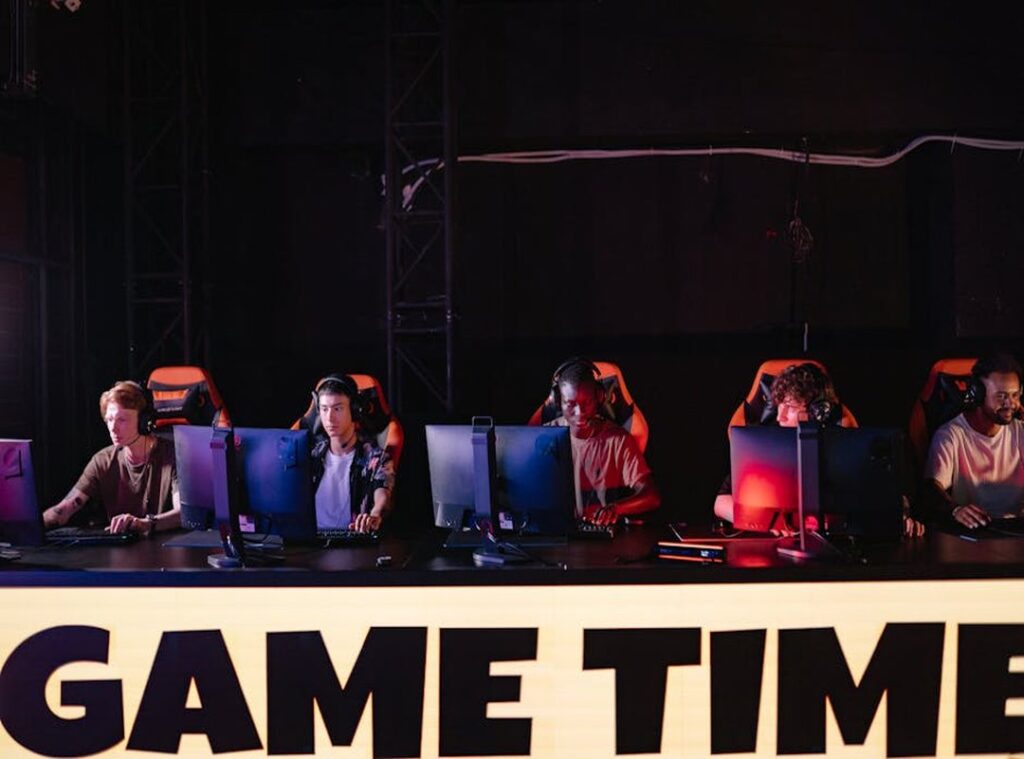
I’m tired of online gaming events that feel like watching paint dry.
You know the ones. You show up, type “gl hf”, and spend two hours pretending to care while everyone else does the same.
Doesn’t that feel hollow? Like you’re playing near people instead of with them?
Most Online Gaming Event Thehakevent options skip real teamwork. No shared goals. No inside jokes that stick.
No reason to come back next week.
I’ve been to thirty-seven virtual events this year alone. Thirty-six were forgettable.
Then I tried Thehakevent.
It’s not just another tournament with a leaderboard slapped on top. It’s built for laughter, chaos, and actual coordination.
This guide tells you exactly what makes it different (and) how to jump in without getting lost.
No fluff. No jargon. Just what works.
Thehakevent: Not a Tournament. A Team Story.
I’ve watched people show up expecting a leaderboard. They leave talking about their team’s inside jokes and the moment the lights dimmed in the virtual room.
Thehakevent is a live, narrative-driven digital escape event (not) a one-off contest or a season-long league. It runs quarterly. You sign up with three friends.
You show up at a set time. And you solve a story together.
It’s not esports. No twitch reflexes. No solo clutch plays.
You won’t see headshots or kill/death ratios. You’ll see someone whispering “Wait (what) did the librarian really mean by ‘the third floor doesn’t exist’?”
That’s the point.
This is collaborative problem-solving disguised as fiction.
Live hosts guide the action (no) AI voiceover, no canned responses. Real people who pivot when your team goes off-script (which they always do). The environments are custom-built.
Not Unity templates. Not reskinned Fortnite maps. Each event has its own world, tone, and logic.
Last year’s heist in Neo-Prague had different rules than this spring’s archive vault mystery.
Does it feel like a movie? Sure (but) you’re not watching. You’re deciding whether to trust the informant or burn the ledger.
You’re choosing which door to open right now, while the clock ticks down.
Some people call it an Online Gaming Event Thehakevent. I just call it the only thing my group looks forward to more than taco night.
Pro tip: Bring headphones. And someone who reads fast. The first clue drops 30 seconds after login.
No warm-up.
Inside Thehakevent’s Game Library: No Fluff, Just Fire
I’ve run through six of these. Every time, my pulse jumps before the countdown hits zero.
This isn’t “puzzles” or “team challenges”. It’s live pressure. You log in.
Your team gets a 90-second briefing. Then the clock starts. No tutorials.
No second chances.
You’re not clicking tiles. You’re rerouting power in a collapsing space station while alarms blare. You’re decoding a CEO’s encrypted diary mid-chase through a neon-drenched Tokyo alley.
You’re physically moving your webcam to scan a fake server rack. And yes, someone always knocks over their coffee cup.
The loop is tight: brief → act → adapt → win (or panic). There’s no pause button. No “skip cutscene.”
You hear your teammate yell “Left vent (now!”) and you move.
That’s the high.
That thrill? It’s real. Not simulated.
Your hands sweat. Your voice cracks. You laugh after the bomb defuses (not) before.
Here’s what you actually get:
- Sci-Fi Adventure
- Cyberpunk Mystery
- Fantasy Quest
- Heist Simulation
- Post-Apocalyptic Survival
Each one forces real-time decisions with real consequences. Not points. Not leaderboards. Outcomes.
I tried the corporate espionage case last month. We had three minutes to clone a biometric key, spoof a security feed, and exit before the AI guard turned. We made it (by) 4.3 seconds.
My throat was raw.
That’s the difference between watching a game and being in it. Most events talk about immersion. Thehakevent builds it.
Then drops you inside.
The Online Gaming Event Thehakevent doesn’t ask if you’re ready.
It asks if you’ll keep your head when the lights go red.
Pro tip: Assign roles before the briefing ends. Seriously. Do it.
Or you’ll spend 20 seconds arguing over who presses the red button.
You don’t solve these alone.
You solve them together. Or you don’t solve them at all.
How to Jump Into Thehakevent (Without Looking Lost)

I signed up for my first Thehakevent thinking it was just another online game night.
It wasn’t.
Go to the official signup page for the Multiplayer Event Thehakevent and pick your path: solo or team. If you’re solo, they’ll match you with three others. No waiting weeks.
Just show up ready. Teams register together. One person handles the form.
Everyone else gets a code. Done.
You need internet. Not “I can load YouTube” internet. Try streaming Netflix in 4K on the same connection (if) that stutters, fix it first.
Webcam and mic? Yes. Not optional.
You’ll talk through puzzles. Typing slows everything down. Use Chrome or Firefox.
Safari sometimes drops audio. Edge works. But only if you updated it this month.
Communication is Key. And I mean actual talking. Not “uh huh” or “yeah.” Say what you see.
Say what you tried. Say when you’re stuck.
Assign roles before Round 1 starts. One person leads. One takes notes.
One watches the timer. Don’t vote on it mid-puzzle. Just pick.
It saves ten minutes.
Think sideways. Not faster. Not harder. Sideways.
One puzzle last year used a grocery list, a Spotify playlist name, and a street sign photo.
No gaming reflexes needed. Just pattern-matching and willingness to say dumb ideas out loud. (Yes, I said something dumb.
Yes, it solved the lock.)
Bring water. Not soda. Soda makes your hands shaky.
Turn off notifications. Seriously (your) phone buzzed during a timed cipher once. We all heard it.
Awkward.
The event runs four hours. Take one real break at the halfway mark. Stand up.
Look away from the screen. Your eyes will thank you.
This isn’t about being the best. It’s about showing up, listening, and not letting your teammate carry you through all five rounds. Online Gaming Event Thehakevent sounds fancy.
It’s not. It’s people solving things together. Mostly laughing.
Sometimes yelling.
Just don’t skip the mic test. I did. Spent 20 minutes mute while everyone thought I was ignoring them.
Beyond Fun: What You Actually Gain
I stopped counting how many times people told me it was “just a game.”
It’s not.
You walk away sharper. Your key thinking gets a real workout. Not in theory, but under time pressure, with real stakes.
Remote collaboration? You learn it fast when your teammate is in Tokyo and you’re debugging a glitch at 2 a.m.
Problem-solving stops being abstract. It’s your squad stuck on level seven, no walkthroughs allowed. You figure it out.
Or you don’t win.
This isn’t just for gamers. Families use it to reconnect. Friends rebuild trust through shared wins.
Corporate teams ditch the forced retreats and do this instead.
The community part? It’s real. Not another Discord server full of bots.
Actual people who laugh at the same terrible in-game puns.
If you want that (real) skill growth, real connection, zero corporate fluff (check) out The online gaming event thehakevent.
Your Adventure Awaits: Are You Ready to Log In?
I’ve seen too many online gaming events fall flat. Boring lobbies. Solo grinding.
Zero real connection.
You wanted something different. Something that feels alive.
Online Gaming Event Thehakevent delivers that. No scripts. No passive watching.
Just real-time collaboration, shared stakes, and actual teamwork.
This isn’t a game you play. It’s an experience you step into.
You’re tired of clicking through empty hype.
You want your team to laugh, strategize, and win together.
So what’s stopping you?
Visit the official Thehakevent website now to view the schedule and book your team’s spot in the next adventure.
It’s the only online gaming event built for people who hate “online gaming events.”
Your team’s first real moment starts there.
Go.
 Williamer Andersoniston has opinions about esports coverage and updates. Informed ones, backed by real experience — but opinions nonetheless, and they doesn't try to disguise them as neutral observation. They thinks a lot of what gets written about Esports Coverage and Updates, Gaming News and Trends, Game Reviews and Ratings is either too cautious to be useful or too confident to be credible, and they's work tends to sit deliberately in the space between those two failure modes.
Reading Williamer's pieces, you get the sense of someone who has thought about this stuff seriously and arrived at actual conclusions — not just collected a range of perspectives and declined to pick one. That can be uncomfortable when they lands on something you disagree with. It's also why the writing is worth engaging with. Williamer isn't interested in telling people what they want to hear. They is interested in telling them what they actually thinks, with enough reasoning behind it that you can push back if you want to. That kind of intellectual honesty is rarer than it should be.
What Williamer is best at is the moment when a familiar topic reveals something unexpected — when the conventional wisdom turns out to be slightly off, or when a small shift in framing changes everything. They finds those moments consistently, which is why they's work tends to generate real discussion rather than just passive agreement.
Williamer Andersoniston has opinions about esports coverage and updates. Informed ones, backed by real experience — but opinions nonetheless, and they doesn't try to disguise them as neutral observation. They thinks a lot of what gets written about Esports Coverage and Updates, Gaming News and Trends, Game Reviews and Ratings is either too cautious to be useful or too confident to be credible, and they's work tends to sit deliberately in the space between those two failure modes.
Reading Williamer's pieces, you get the sense of someone who has thought about this stuff seriously and arrived at actual conclusions — not just collected a range of perspectives and declined to pick one. That can be uncomfortable when they lands on something you disagree with. It's also why the writing is worth engaging with. Williamer isn't interested in telling people what they want to hear. They is interested in telling them what they actually thinks, with enough reasoning behind it that you can push back if you want to. That kind of intellectual honesty is rarer than it should be.
What Williamer is best at is the moment when a familiar topic reveals something unexpected — when the conventional wisdom turns out to be slightly off, or when a small shift in framing changes everything. They finds those moments consistently, which is why they's work tends to generate real discussion rather than just passive agreement.